Fair Climate Policy

For ages: 10-14 – Duration: 50 min – Languages: NL-FR – Rating:⭐⭐⭐⭐ – Free game …………………..


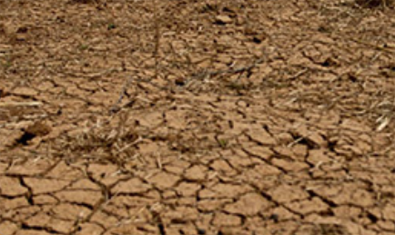
In areas already affected by the climate crisis, droughts, floods, and storms are ruining many crops like grain, corn, vegetables, fruit, and coffee. This causes farmers to lose their main food and income. They become more vulnerable and poverty grows.

I Fight for a Fair Climate Policy

Pupils can explain why climate change poses a risk to farmers worldwide and express their indignation about this. They learn how to take action in their own local environments, explain why collective protest works and explain why fair trade rules contribute to the farmers’ risilience in relation to climate challenges.

Link to website: Fair Climate Policy

Linked categories to this game:

World-Domino

For ages: 16-18 – Duration: 50 min – Languages: NL – Rating:⭐⭐⭐⭐- Free game.………………

Students explore how different forms of work are available to adults and how they are valued differently.

Prosperity and Fundamental Human Rights

Students explore how prosperity is unequally distributed across the world, including Belgium. Also how values and standards about work vary, depending on social and cultural backgrounds. They practice applying fundamental Human Rights and the Rights of the Child and explore the role of international organisations in promoting global well-being and peace.

Link to website: World Domino


Linked categories to this game:

Planet Vivo

For ages: 8-11 – Duration: 80 min – Languages: EN-DE-NL-FR-PT – Rating:⭐⭐⭐⭐⭐ – Free game

A team game about five ecosystems where players face challenges to learn about the threats to nature and how to protect it.

The game board shows five damaged ecosystems where life struggles to survive. Each round, the poles, forests, oceans, savannahs, and deserts send out SOS calls. Players must respond to each one and solve the challenges needed to bring these ecosystems back to health!

Puzzle to restore Ecosystems

When a group completes a challenge, they earn a puzzle piece. If they don’t succeed, they get a blank piece instead. At the end, all the pieces are assembled to reveal a transformed scene: the ecosystems are healed or the damage has been stopped. Students also receive an uplifting message about how they can help protect all forms of life around them.

Link to the game: Planet Vivo

Linked categories to this game:

My Planet is Hot!

For ages: 8-12 – Duration 30 min – Languages: FR – Rating:⭐⭐⭐⭐⭐ – Free game……………………….

The game has three steps where players take on roles like the sun, greenhouse gases, scientists, climatologists, and people living on Earth. The leader starts by asking the children what they know about global warming. Then, they give out the roles and guide the discussion, making sure everyone can talk and understand what’s happening.

Downloadable PDF

The ‘badges’ and ‘residents’ cards are provided free in the game and just need to be printed. You will also find a list of other optional accessories to purchase.

Link to website: My planet is hot!

Linked categories to this game:

Radio Oorwoud

For ages: 10-12 – Duration ? – Languages: NL – Rating: ⭐⭐⭐⭐ – Free game…………………………………

Challenge your friends to a board game about climate action. You will learn interesting things about the natural world and how to protect it along the way. Let your imagination run wild!.

Focus on conservation

A board game focused on conservation. Learn how to protect nature and challenge your friends to a game all about biodiversity. No instructions needed—just play with dice. Download the PDF Explore renewable energy, trains versus airplanes, waste recycling, energy saving, switching off lights, and more. A PDF is available for download in all European languages.

Link to website: Radio Oorwoud

Linked categories to this game:

To Zero Waste

For ages: 7-12 – Duration: 60 min – Languages: FR – Rating:⭐⭐⭐ – Free game.………………………………….

To Zero Waste gives players the opportunity to explore why reducing waste matters. They answer questions about waste and its impact, then explore solutions using the 6 Rs: Refuse, Reduce, Reuse/Repair, Recycle, Return to the Earth, Reconnect.

Reduce waste by refusing what you don’t need.

Players learn to refuse what they don’t need, like junk mail, promo items, single-use packaging, and products harmful to health or the environment. They explore simple solutions like using a ‘no ads’ mailbox sign or shopping in bulk with glass jars and reusable fabric bags.

Link to website: To Zero Waste

Linked categories to this game:

Waste from A to Z

For ages: 9-12+ – Duration: 90 min – Languages: FR – Rating:⭐⭐⭐ – Free game………………………………

The game helps children learn about waste through themes like raw materials, sorting, supply chains, and recycling. Working in teams, they complete themed missions related to different types of waste, with guidance and support from adults throughout the activity.

Raw Materials

Children use raw material cards to find which one is used to make their team’s material. Then they name three raw materials, renewable or not. They can check their answers with solution cards.

Link to website: Waste from A to Z

Linked categories to this game:

Climate Tables

For ages: 14+ – Duration: ? – Languages: NL-EN – Rating:⭐⭐⭐⭐⭐ – Free game.……………………………..

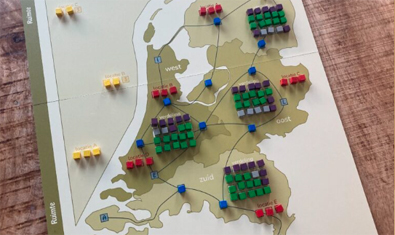
The Dutch Climate Agreement (2019) was the main guide for creating the game. The sectors are taken almost directly from the agreement. The game focuses on the most interesting themes, called ‘cross-sectoral coherence’ in the agreement. The game simplifies the list of measures and actions from the agreement. A complex 239-page document has been turned into a game that lasts a few hours.

Fundamental Subject

Climate change is proven and important, so it needs our attention. It already affects the world and will have a bigger impact in the future. Climate Tables aims to get more people interested, especially those who want to learn about the situation in the Netherlands.

Link to website: Climate Tables

Linked categories to this game:

Core Values Game ®

12-99 yrs. – Duration: 10-60 min – Languages: NL-EN – Rating: ⭐⭐⭐⭐⭐ – Paid game………………….

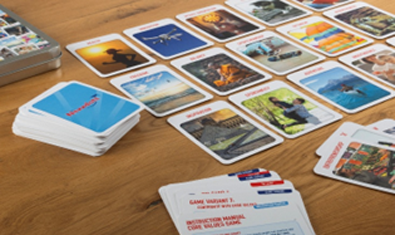
With the Core Values Game®, you’ll discover who you are and what you truly value. Core values determine your way of life, identity, and choices. You will discover the core values of yourself and your fellow players, which core values are relevant to professions, how they become visible in daily life, and how you can contribute to the Sustainable Development Goals (SDGs). The 7 different game variants lead to interesting conversations with appreciation for each other and lots of fun. By working together and thinking creatively, you solve funny or serious problems. Tip cards provide extra depth and are e.g., about effective listening, creative thinking, shaping your future, and SDGs.

Ideal game for citizenship classes, career orientation, sustainable development projects, and introduction programmes. Also suitable for the development and implementation of the school’s educational vision.

Storage tin with 60 core values cards, 7 game variants, and 9 tip cards. Online components contain an explanation of the core values, various creative thinking techniques, and an up-to-date list of professions from A to Z with detailed professional information. About 20 participants per game. The game is endlessly repeatable. Link to website: Core Values Game®

Linked categories to this game:

Rice Up

For ages: 16+ – Duration ? – Languages: NL – Rating:⭐⭐⭐⭐⭐ – Paid game………………………………….

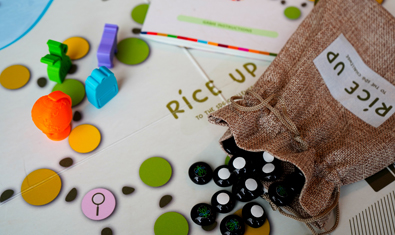
From the will to achieve the Sustainable Development Goals more broadly and deeply, and to show the interplay between these goals, Willem Bennenbroek and Marieke van Hoof, together with Radboud University, came up with the game Rice Up. In this serious game, you as a player take on the role of a rice farmer in Rurori. You want enough money in the bank, food on your plate and a good future for your children in a healthy living environment. But, that turns out not to be so easy. Rice Up focuses on mapping the dynamics between SDGs. Gradually, this dynamic quickly shows itself in an interactive way.In order to explain the connections between the 17 SDGs, Cultural Anthropology lecturers at the Radboud University, Luuk van Kempen and Lau Schelpen decided to develop a board game. In this ‘serious game’ players experience the daily life of a rice farmer and learn how issues such as food security, farming practices and education interact.

Being a Rice Farmer yourself as player

In addition to the everyday choices you will face as a rice farmer in Rurori, your SDG knowledge will be tested and unexpected events will come your way. Knowledge questions are used to ask general information about the SDGs and the current status of these goals. Through event cards, players learn to anticipate their choices and master the system of the Sustainable Development Goals in a playful way. All choices have an effect on your community and your joint SDG score, which you can easily keep track of on our online dashboard. Players try to establish a sustainable future for Rurori together and develop a suitable strategy together. Players manage to achieve larger goals despite inequalities keep seeing? Remember: only together can we achieve the SDGoals.

Link to website: Rice Up

Linked categories to this game: