Fair Climate Policy

For ages: 10-14 – Duration: 50 minutes – Languages: NL-FR – Rating:⭐⭐⭐⭐ – Free game ……………………

In areas already affected by the climate crisis, droughts, floods, and storms are ruining many crops like grain, corn, vegetables, fruit, and coffee. This causes farmers to lose their main food and income. They become more vulnerable and poverty grows.

I Fight for a Fair Climate Policy

Pupils can explain why climate change poses a risk to farmers worldwide and express their indignation about this. They learn how to take action in their own local environments, explain why collective protest works and explain why fair trade rules contribute to the farmers’ risilience in relation to climate challenges.

Link to website: Fair Climate Policy

Linked categories to this game:

World-Domino

For ages: 16-18 – Duration: 50 minutes – Languages: NL – Rating:⭐⭐⭐⭐- Free game.………………………………….

Students explore how different forms of work are available to adults and how they are valued differently.

Prosperity and Fundamental Human Rights

Students explore how prosperity is unequally distributed across the world, including Belgium. Also how values and standards about work vary, depending on social and cultural backgrounds. They practice applying fundamental Human Rights and the Rights of the Child and explore the role of international organisations in promoting global well-being and peace.

Link to website: World Domino


Linked categories to this game:

Tomato Rally

For ages: 10-18 – Duration: 30-45 minutes -Languages: DE – Rating:⭐⭐⭐⭐ – Free game.………………………………….

The method guide explains step by step how teachers can use this digital activity. It includes the learning goals, target group, duration, number of participants, digital materials and tools, a brief overview, preparation, how to run it, and how to evaluate it.

Digital methods and offering

If we see digitalisation as a catalyst, we can use digital methods to build media skills, practical knowledge, and flexible learning, along with social and method skills in learners. That’s why, with help from our experienced speakers, we have turned our face-to-face methods on social, ecological, and global sustainability into digital formats. This allows educators and trainers work with them easily. We hope these digital methods will support and speed up the implementation of the ESD state strategy.

Link to website: Tomato Rally

Linked categories to this game:
The Connected Plate

For ages: 8-12 – Duration: 2-3 units – Languages: DE – Rating:⭐⭐⭐⭐- Free game.………………………………….

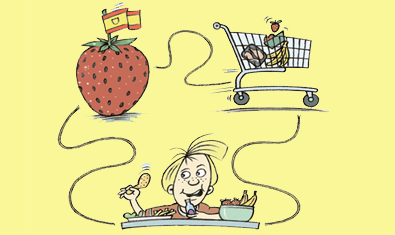
Each student is given an ‘identity’ like a food item (strawberry, chicken, chips), someone in the food chain (farmer, driver), or a link in the process (water, field, bin worker). They think about their roles and use string to show how they are connected. This helps them understand how food systems are linked and encourages systems thinking.

Consider different possible courses of action

Based on the pupils’ ideas, the teacher can explore certain topics in more detail and help them think about different actions they could take. The activity is inspired by the ‘Food Game’ from Belgian NGOs Quinoa and Rencontre des Continents.

Link to website: The Connected Plate

Linked categories to this game:

The Story of a Grain of Wheat

For ages: 6-14 – Duration: 60 + minutes – Languages: DE – Rating:⭐⭐⭐- Free game.………………………………….

Everything we use—like food, clothes, gadgets, and furniture—needs to be made first. This uses many raw materials and resources. In this activity, learners follow the journey of a grain of wheat to understand how production, processing, and consumption are connected. To start, learners are asked where our food comes from and how it reaches our homes.

Noted on a poster or the board

The pupils draw cards with names on them (e.g. farmer, truck driver, harvest worker, seed manufacturer, etc.). Pupils with the same role get together and discuss what their tasks are for the provision of food and what activities they carry out. Once the learners have set themselves up correctly, each group takes turns explaining what happens to the grain of wheat and what their role is in it. The role play illustrates the path a product takes before it ends up on our plates.

Link to website: The story of a grain of wheat

Linked categories to this game:

Field of Possibilities

For ages: 8-12 – Duration: 30 minutes – Languages: FR – Rating:⭐⭐⭐⭐ – Free game.……………………………….

Our food choices have many impacts on the environment, and our meals demand more and more resources. This educational game encourages reflection on sustainable eating

The concept of sustainable food

Our food affects the environment in many ways and uses more and more resources. To eat sustainably, we need to think about how we use the Earth and what we choose to eat. This means balancing good farming practices with choices people are willing to make.

Link to website: The Field of possibilities

Linked categories to this game:

Potatoes, Corn, Avocado

For ages: 9-12 – Duration: 5/6 units -Languages: DE – Rating:⭐⭐⭐- Free game. .…………………………………

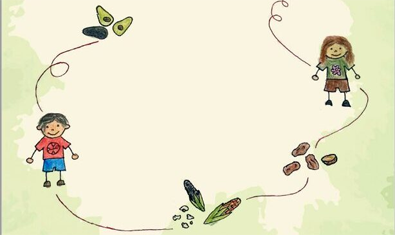
The role-playing game is intended to help teachers and students explore the topic of nutrition, specifically the origin, production, and consumption of potatoes, corn, and avocados, and to discover connections between Germany and Chile – even without being involved in a partnership. The students embody a food or a person who is connected to the food, for example, through cultivation, sale, or consumption.

A role-playing bingo game

This role-playing game helps students understand how their food choices affect people, the environment, and the economy. It encourages them to see things from different points of view and think more carefully about what they eat. A bingo-style game shows links between their choices and Chile in a global context. The activity also introduces indigenous peoples, focusing on the Mapuche in Chile, to raise awareness of their current lives and challenges.

Link to website: Potatoes, corn, avocado

Linked categories to this game:

A Net Made of Plastic

For ages: 8+ – Duration: ? – Languages: DE- Rating:⭐⭐⭐⭐ – Free game.……………………………….

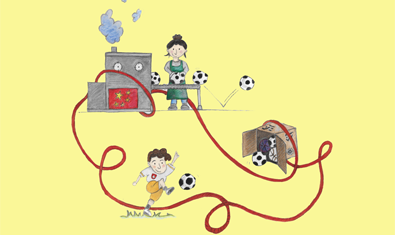
A Net Made of Plastic (“Ein Netz aus Plastik”) is an exercise that can be used to playfully explore the topic of our use of plastic. Students represent a plastic object (e.g., rubber boots) or an element related to it (e.g., petroleum, an affected animal, a truck driver). They then use a string to represent the existing connections.

Impact on our consumption choices

This role-playing game enables participant to: become aware of the impact our consumption choices have on the environment, society, and the economy, practice the ability to recognize connections, reflect on the widespread use of plastic and the reasons for this (ideal properties, low cost, practical material); form their own opinion on the topic; and develop concrete suggestions for action. PDF to download. Two cycles.

Link to website: A Net Made of Plastic

Linked categories to this game:

Waste Trackers

For ages: 6-18 – Duration: 45 minutes – Languages: FR – Rating:⭐⭐⭐⭐⭐ – Free game.………………………………….

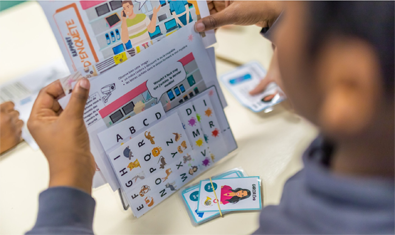
Each player finds a different type of waste (e.g. plastic bag, smartphone, spray can, tomatoes, or clothing) and asks: How did it get here? Why? Who’s responsible? How long will it take to break down in nature? And most importantly – could we do things differently? To find the answers, students work in teams using an investigation pack. Each team explores a different case based on the card they receive.

International solidarity

This activity helps students begin to understand the links between what we consume, protecting the environment, and global responsibility. There are two versions: one for ages 6–11 (primary) and one for ages 12–18 (secondary).

Linked categories: 12 Responsible Consumption and Production

Link to website: Waste Trackers

Linked categories to this game:

Fair Income for Cocoa Farmers

For ages: 10+ – Duration: 50 minuten – Languages: NL-FR –  Rating:⭐⭐⭐⭐ – Free game.……………………………….

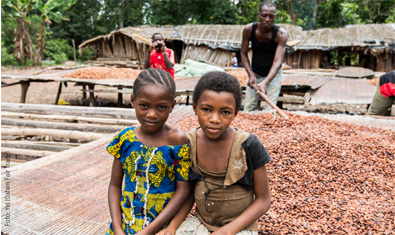
In Western countries, many people earn more than a living income. But in the global South, many families do not earn enough. For example, a typical household in Ghana’s cocoa industry earns less than half a living income. In Ivory Coast, a similar family earns less than a third of a living income.

Fair Trade Lessons

Thank you for introducing your pupils to fair trade! This lesson plan enables you to teach about living income in one lesson. You’ll find useful background information for preparation, followed by an activity to use in class.


Link to website: Fair Income for Cocoa Farmers

Linked categories to this game: