World-Domino

For ages: 16-18 – Duration: 50 minutes – Languages: NL – Rating:⭐⭐⭐⭐- Free game.………………………………….

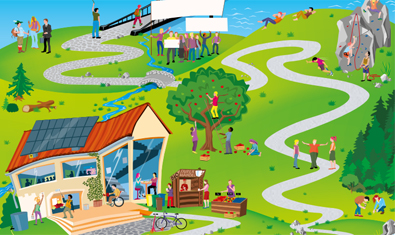
Students explore how different forms of work are available to adults and how they are valued differently.

Prosperity and Fundamental Human Rights

Students explore how prosperity is unequally distributed across the world, including Belgium. Also how values and standards about work vary, depending on social and cultural backgrounds. They practice applying fundamental Human Rights and the Rights of the Child and explore the role of international organisations in promoting global well-being and peace.

Link to website: World Domino


Linked categories to this game:

Tomato Rally

For ages: 10-18 – Duration: 30-45 minutes -Languages: DE – Rating:⭐⭐⭐⭐ – Free game.………………………………….

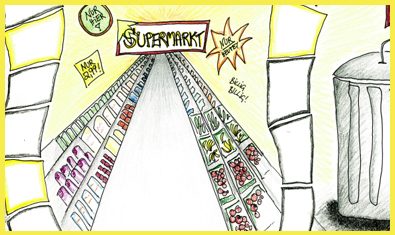
The method guide explains step by step how teachers can use this digital activity. It includes the learning goals, target group, duration, number of participants, digital materials and tools, a brief overview, preparation, how to run it, and how to evaluate it.

Digital methods and offering

If we see digitalisation as a catalyst, we can use digital methods to build media skills, practical knowledge, and flexible learning, along with social and method skills in learners. That’s why, with help from our experienced speakers, we have turned our face-to-face methods on social, ecological, and global sustainability into digital formats. This allows educators and trainers work with them easily. We hope these digital methods will support and speed up the implementation of the ESD state strategy.

Link to website: Tomato Rally

Linked categories to this game:

Core Values Game ®

12-99 years. Game duration: 10-60 minutes. Languages: NL-EN.⭐⭐⭐⭐⭐ – Paid game…………

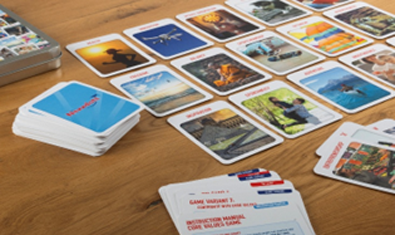
With the Core Values Game®, you’ll discover who you are and what you truly value. Core values determine your way of life, identity, and choices. You will discover the core values of yourself and your fellow players, which core values are relevant to professions, how they become visible in daily life, and how you can contribute to the Sustainable Development Goals (SDGs). The 7 different game variants lead to interesting conversations with appreciation for each other and lots of fun. By working together and thinking creatively, you solve funny or serious problems. Tip cards provide extra depth and are e.g., about effective listening, creative thinking, shaping your future, and SDGs.

Ideal game for citizenship classes, career orientation, sustainable development projects, and introduction programmes. Also suitable for the development and implementation of the school’s educational vision.

Storage tin with 60 core values cards, 7 game variants, and 9 tip cards. Online components contain an explanation of the core values, various creative thinking techniques, and an up-to-date list of professions from A to Z with detailed professional information. About 20 participants per game. The game is endlessly repeatable. Link to website: Core Values Game®

Linked categories to this game:

The World at the Dining Table

For ages: 6-14 – Duration: 45 minutes – Languages: DE – Rating:⭐⭐⭐ – Free game.………………………………….

While food is abundant in the countries of the Global North, millions of people in the Global South suffer from hunger and malnutrition. Most children and young people in Austria probably cannot imagine what it means to suffer from real hunger and take the constant availability of food for granted. A change of perspective is intended to raise awareness of the problems of global food security. Through a role-play, the students learn about the unjust distribution of food.

Distributing the Food

The children form their groups (social classes). The teacher then explains: One group represents the wealthy and is allowed to sit at a (set) table with chairs. This group is served an elaborate and varied meal. Another group represents the middle class. They are given a wrapped loaf of bread, butter, a jug of tap water with glasses, and a cutting board with a bread knife placed on a small table with a few chairs. They must take care of distributing the food within the group.

Link to website: The World at the Dining Table

Linked categories to this game:

Rice Up

For ages: 16+ – Duration ? – Languages: NL – Rating:⭐⭐⭐⭐⭐ – Paid game………………………………….

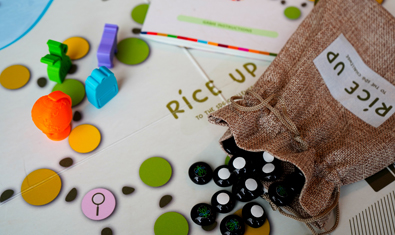
From the will to achieve the Sustainable Development Goals more broadly and deeply, and to show the interplay between these goals, Willem Bennenbroek and Marieke van Hoof, together with Radboud University, came up with the game Rice Up. In this serious game, you as a player take on the role of a rice farmer in Rurori. You want enough money in the bank, food on your plate and a good future for your children in a healthy living environment. But, that turns out not to be so easy. Rice Up focuses on mapping the dynamics between SDGs. Gradually, this dynamic quickly shows itself in an interactive way.In order to explain the connections between the 17 SDGs, Cultural Anthropology lecturers at the Radboud University, Luuk van Kempen and Lau Schelpen decided to develop a board game. In this ‘serious game’ players experience the daily life of a rice farmer and learn how issues such as food security, farming practices and education interact.

Being a Rice Farmer yourself as player

In addition to the everyday choices you will face as a rice farmer in Rurori, your SDG knowledge will be tested and unexpected events will come your way. Knowledge questions are used to ask general information about the SDGs and the current status of these goals. Through event cards, players learn to anticipate their choices and master the system of the Sustainable Development Goals in a playful way. All choices have an effect on your community and your joint SDG score, which you can easily keep track of on our online dashboard. Players try to establish a sustainable future for Rurori together and develop a suitable strategy together. Players manage to achieve larger goals despite inequalities keep seeing? Remember: only together can we achieve the SDGoals.

Link to website: Rice Up

Linked categories to this game:

Funny Planet

For ages: 5-18 – Duration: ? – Languages: FR – Rating:⭐⭐⭐ – Free game.……………………………….

Funny Planet combines resources in a way that is both interdisciplinary and systemic. It organises activities according to age-group, by starting close to home for young children and presenting older players with planetary challenges.

Experiential, Sensory, Critical,

The activities are innovative by being experiential, embodied, collective and active. At the same time, players are encouraged to think deeply about sustainability issues. The games can be played online or downloaded.

Link to website: Funny Planet

Linked categories to this game:

Goals2030

For ages: 10-12 – Languages: NL – Rating:⭐⭐⭐⭐⭐ – Paid game………………………………

“As experienced …………appeal to learners.” The assignments encourage creative thinking and motivate pupils to integrate their own input.

Citizenship education in practice

Do you want your pupils to participate enthusiastically and creatively in citizenship education? Download the free assignments for an impression of the materials on offer. The Goals2030 website offers step-by-step plans and more than 150 videos. The game duration of 51 tasks varies from half an hour to five hours.

Link to website: Goals2030

Linked categories to this game:

FutureLab Game®

Age: 12-99 years. Game time: 15-60 minutes. Languages: NL-EN.⭐⭐⭐⭐⭐ – Paid game …………………..

With the FutureLab Game®, players delve into the Sustainable Development Goals (SDGs) and their future opportunities. Players formulate a personal question for the future with which they can look for answers on the internet and during company visits.

The FutureLab Game® makes players interested in sustainable developments and innovations. The game stimulates creative thinking. Players delve into various future questions together and formulate their personal future questions based on inspirational videos. They discover in a playful way what appeals to them and what future possibilities they want to explore further.

The game features 3 different team games. Team game 3 includes 68 inspirational videos, linked to the SDGs (4 per SDG). These videos show how various organizations and individuals contribute to the SDGs with often innovative solutions. They can be downloaded via a QR-code on the Nexxdott website.

The game fits perfectly with citizenship lessons, career orientation, and sustainable development projects, and it can be linked to systems thinking lessons and writing a profile paper based on personal questions about the future.

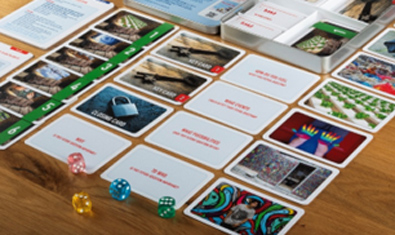
Storage tin with playsets for 4 teams of 4-5 people: 3 different team games, 60 photo cards, an instruction card on formulating future questions, SDG cards, 12 different question cards, 2 key cards, 1 closure card, 6 tip cards, dice, and a teacher’s manual. Online: page for young people with 68 inspirational videos, an explanation of the Doughnut Economy and SDGs, with accompanying videos.

The game is also suitable for adults, for example, as a team game with teams of teachers or in companies. It promotes knowledge and awareness of the Sustainable Development Goals (SDGs). Link to the website: FutureLab Game®.

Linked categories to this game:
The Matchstick Game

For ages: 10-16 – Duration: 45 minutes – Languages: DE – Rating:⭐⭐⭐⭐⭐- Free game.………………………………….

The game allows students to experience the finiteness of a renewable raw material in the event of overuse. They take on the role of three foresters, who in the first round, compete with each other and try to harvest as many trees as possible for themselves. In a second round, the students cooperate with each other and manage the forest together. The game shows them that excessive timber removal endangers the existence of the forest and that sustainable management under competitive conditions is difficult.

Health and Safety of the Environment

The game introduces the players to the complexities of maintaining the health and safety of a natural environment.

Link to website: The Matchstick Game

Linked categories to this game: